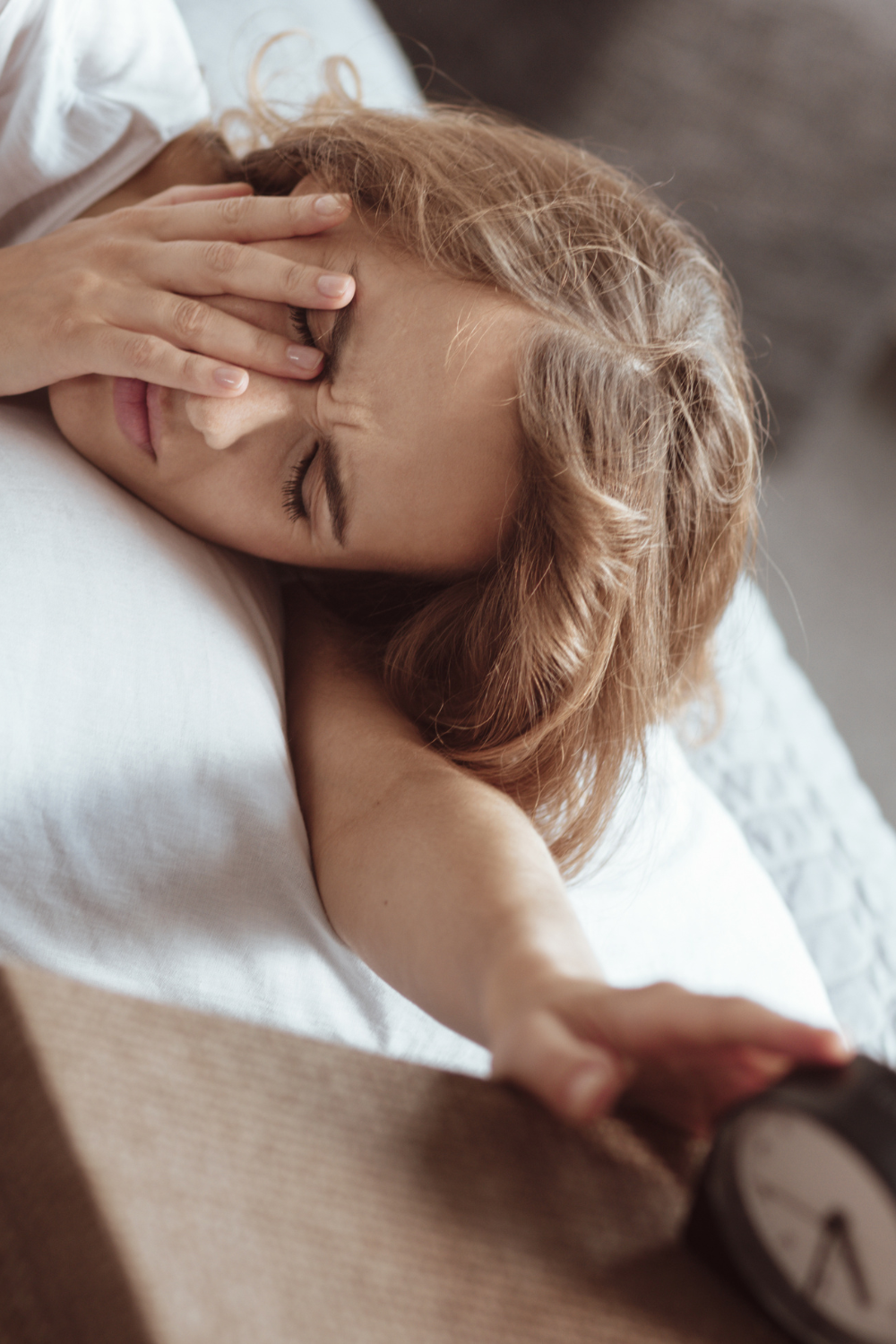

No one told you that the mood changes might be part of it too.
Maybe it's a low-grade anxiety that hums under everything, a sense of being on edge for reasons you can't always name. Maybe it's a heaviness that settles in and makes things you used to enjoy feel like effort. Maybe it's both, trading off, and you've started to feel like you barely recognize your own emotional weather.
You've probably tried to talk yourself out of it. Told yourself to be grateful, to push through, to stop making a big deal of it. Maybe you've wondered if it's just stress, or just your personality, or just you not coping as well as you should.
Here's something that too often goes unsaid: for many women with PMOS | PCOS, mood changes aren't separate from the condition, and they aren't a sign that you're weak or ungrateful or bad at handling life. There are real, physiological reasons the two are connected, and you deserve to know them.
Why PMOS | PCOS and Mood Are Connected
PMOS | PCOS shows up differently for every woman. What follows is one common pattern behind this, not the only one. If it doesn't quite match your experience, that doesn't mean this isn't PMOS | PCOS, it just means yours is showing up a different way.
The link here is well documented. Research has consistently found that women with PMOS | PCOS experience depression and anxiety at meaningfully higher rates than women without it, several times higher in many studies. This is not a coincidence, and it is not just the understandable emotional response to living with a difficult condition, though that's real too. There appear to be direct physiological threads connecting the two.
Insulin resistance is one of them. Research has linked it specifically to higher depression risk in PMOS | PCOS, with one explanation being that insulin resistance may affect how adaptable the brain is, influencing the regions involved in regulating emotion. The blood sugar swings that come with it don't help either, since sharp rises and crashes can drag mood and irritability along with them. Elevated androgens have been associated with mood changes as well. And the chronic, low-grade inflammation common in PMOS | PCOS is increasingly understood to play a role in mood, since inflammation and emotional regulation are more connected than we once thought.
So when you feel anxious or low, that experience isn't only in your head in the dismissive sense people usually mean. It's connected to what's happening in your body, through your hormones, your blood sugar, and/or your inflammation levels. That doesn't make the feelings less real. It makes them more understandable.
You might be wondering, does this mean the way I feel is just my hormones, and not really me? Not at all. Your feelings are real and they are yours, and the reasons behind them are worth understanding. Knowing that there's a physiological piece to this isn't meant to explain your emotions away. It's meant to lift some of the self-blame, so you can stop treating this as a personal failing and start treating it as something real that deserves real support.
None of this is your fault. Feeling this way does not mean you are weak, ungrateful, or failing to cope. It means you are a person with a condition that genuinely affects mood, and that is worth taking seriously and caring for, not white-knuckling through in silence.
Why This Deserves Real Attention
It's easy to push mood symptoms to the bottom of the list, to treat them as less legitimate than the physical ones, or to assume you're supposed to just manage them privately.
But your mental health deserves the same attention as any other part of this. Mood struggles are not a minor footnote to PMOS | PCOS, they're one of the most common and most under-discussed parts of it. They can also make everything else harder, including the day-to-day care that might otherwise help, which is exactly why they deserve support rather than silence.
If you're noticing persistent anxiety or low mood alongside the other signs in this series, please know that's worth bringing to someone who can help, as part of the whole picture, not something to minimize or wait out.
What to Do Next
Mood symptoms deserve real medical support, and I want to be clear about the limits of what coaching is here. If you're struggling with anxiety or depression, the most important step is talking with a doctor or a mental health professional. This isn't something to handle alone, and reaching out is a sign of strength, not weakness.
It can help to name what you're experiencing plainly to your provider, and to mention your PMOS | PCOS, since the connection is relevant and not every provider will make it automatically. If your mood has shifted alongside other PMOS | PCOS symptoms, saying so directly can help them see the fuller picture. Depending on your situation, they may explore both the mental health support you need directly and the metabolic factors that can play a role underneath.
If you are ever in crisis or thinking about harming yourself, please reach out right away to a doctor, a crisis line, or emergency services. You deserve immediate support, and it is available.
Where Coaching Fits In
I want to be honest and careful about this part. Coaching is not therapy, and it is not a substitute for mental health care. If anxiety or depression is part of your experience, professional mental health support comes first, and coaching works alongside it, never in place of it.
Where coaching can help is the lifestyle layer underneath, the blood sugar stability, sleep, stress load, and movement that influence the physiological factors connected to mood over time. Supporting your body's insulin sensitivity and steadier energy won't replace the care of a therapist or doctor, but it can be one meaningful piece of a fuller support system, alongside the professional help you deserve.
And because I live with PMOS | PCOS myself, I understand how isolating this part can feel, and how rarely anyone names it out loud. You are not alone in this, and you don't have to carry it in silence.
The Symptom Decoder is a short, plain-language read. No fluff, no pitch. You print it, mark it up, and walk away with one or two things worth bringing to your next appointment. Download The PMOS | PCOS Symptom Decoder → No pressure. No pitch. Just a clearer read on what your body might be telling you.
Anxiety rarely travels alone. It often shows up alongside fatigue that sleep doesn't fix, waking up exhausted no matter how early you went to bed, cravings that feel bigger than willpower, and missed or unpredictable periods.
A note on a sensitive topic: if you're struggling with your mental health, please know support is available and you deserve it. A good next step is talking with your doctor or a mental health professional. If you're in crisis or thinking about harming yourself, in the US you can call or text 988 to reach the Suicide and Crisis Lifeline, any time, day or night.