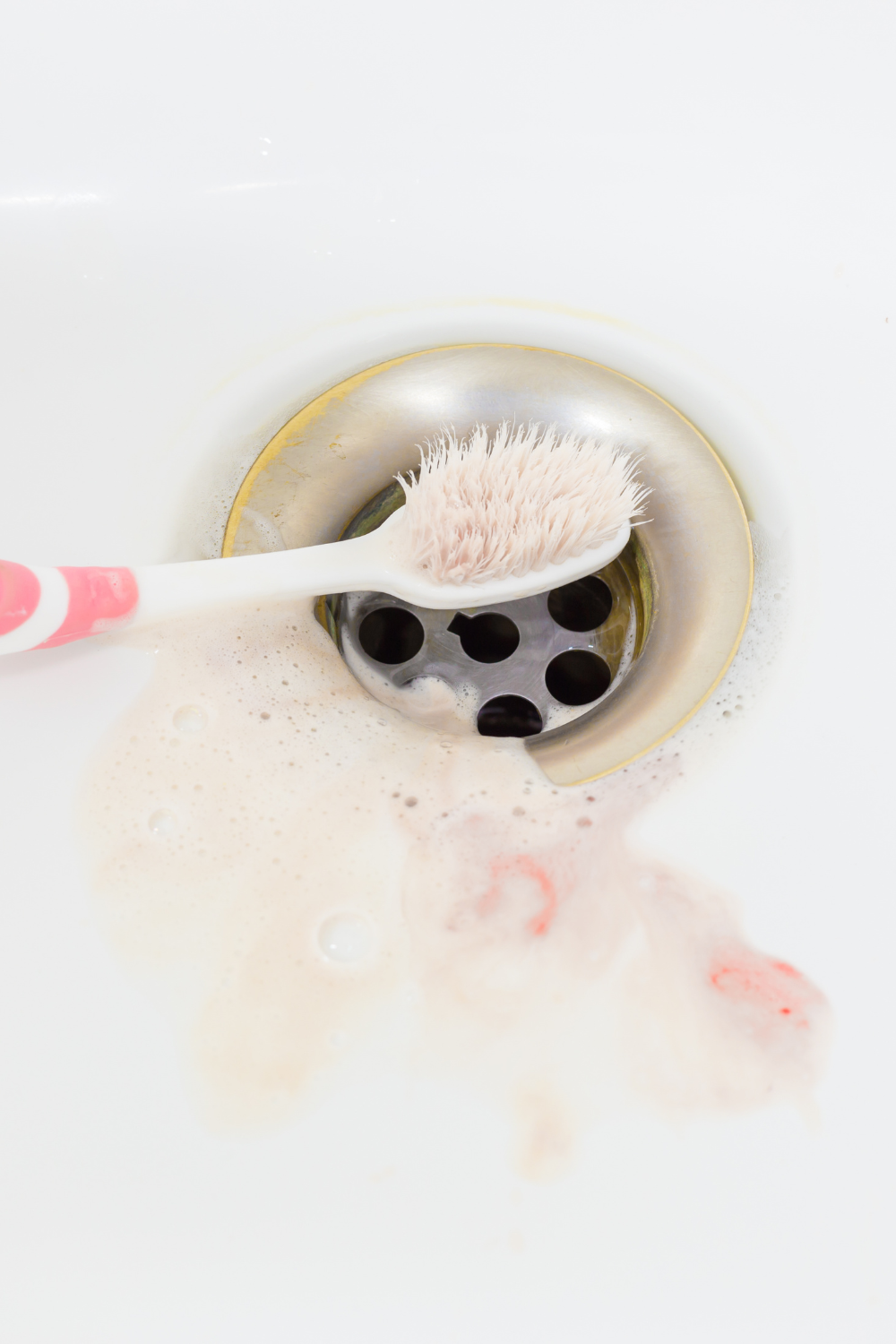
You noticed it while brushing.
A little pink in the sink. Not a lot. Just enough to make you pause for a second.
You probably brushed harder the next time, thinking maybe you'd been too gentle and missed some plaque. Or you switched toothbrushes, assuming yours was too stiff. Maybe you started flossing, certain you'd find the culprit if you just paid closer attention.
But it kept happening. A little blood here, and a little tenderness there. Gums that looked slightly puffier than you remembered.
So you told yourself it was probably nothing. Everyone's gums bleed sometimes, right? You're probably just brushing too hard, or it's been a while since your last cleaning, or you're stressed and not flossing as consistently as you should be.
Here's what almost no one tells you: bleeding gums are rarely about your brushing technique.
For many women with PMOS | PCOS, bleeding gums are a signal. And once you understand what they're actually pointing to, you stop blaming yourself for something that was never really about effort in the first place.
(This is actually part of a bigger pattern. If you've also noticed dark, velvety patches on your skin, stubborn jawline acne, small skin tags, or thinning hair at your crown, those are other versions of the same kind of signal.)
What's Actually Happening in Your Gums
As a registered dental hygienist, this is one of the clearest patterns I've watched play out over and over in women with PMOS | PCOS, often years before anyone connects the dots.
PMOS | PCOS shows up differently for every woman. What follows is one common pattern behind this, not the only one. If it doesn't quite match your body, that doesn't mean this isn't PMOS | PCOS, it just means yours is showing up a different way.
Here's the short version of what's happening underneath that bleeding.
PMOS | PCOS is associated with chronic, low grade inflammation throughout the body. Your gums are not separate from that. Chronic inflammation makes the blood vessels in your gums more fragile, so they swell more easily and become prone to puffiness, redness, and bleeding, even with gentle brushing.
Hormones play a direct role here too. Shifts in estrogen and progesterone affect blood flow in your gums and change how your gum tissue responds to everyday plaque. That means the exact same amount of plaque that never used to bother you can suddenly cause bleeding or soreness. It's not that your hygiene got worse. It's that your gum tissue has become more reactive than it used to be.
Insulin resistance adds another layer. Higher androgen levels interfere with how your cells respond to insulin, so even when there's enough insulin in your system, your cells don't use it effectively. That matters for your gums specifically, because poorly managed blood sugar slows down your body's ability to heal and fight off the bacteria that live where your tooth meets your gums. So gum tissue that would normally bounce back from minor irritation stays inflamed longer, and heals slower.
Put simply: your hormones, your inflammation levels, and your insulin sensitivity are all showing up in your mouth. Long before most women think to ask their doctor a single question about it.
You might be wondering, if I just brush more gently, will the bleeding stop? Possibly, for a little while, but if the real driver is chronic inflammation and hormone related sensitivity, gentler brushing alone won't address why your gums became more reactive in the first place.
None of this happened because you're doing something wrong at the sink. This is not a discipline problem, it's an inflammation and hormone problem, and it's remarkably common among women with PMOS | PCOS, even those with excellent oral hygiene.
Seeing how your mouth, your hormones, and the rest of your body connect is exactly the kind of whole-picture thinking coaching is built around. Schedule Your Free PMOS | PCOS Strategy Session and let's look at the full picture together.
Why This Matters Beyond Your Smile
This isn't just about whether your gums look pink and healthy.
Several studies have found a positive correlation between inflammatory markers in the blood and the same markers used to measure gum disease, including bleeding when a dentist or dental hygienist probes your gums. Researchers believe insulin resistance may be the thread connecting both, since it drives the same chronic, low grade inflammation in both your gums and the rest of your body.
That relationship runs in both directions too. Evidence suggests periodontal disease itself can cause chronic, low level inflammation that contributes to insulin resistance, which can then play a role in the development of type 2 diabetes, a condition already more common in women with PMOS | PCOS.
In other words, your gum health and your metabolic health are talking to each other constantly. Ignoring bleeding gums doesn't just risk your teeth down the road. It may also be letting inflammation compound in a way that makes your other PMOS | PCOS symptoms harder to manage.
What to Do Next
If you've noticed bleeding, puffiness, or sensitivity in your gums, two appointments matter here, not just one.
See your dentist or hygienist, and tell them about your PMOS | PCOS diagnosis if you haven't already. Get evaluated immediately if you notice persistent gum pain, swelling that lasts more than a few days, pus between your teeth and gums, sudden tooth sensitivity, or any looseness in your teeth. Even without those more serious signs, regular bleeding is worth a conversation, not something to wait out.
Talk to your doctor too, especially if you haven't had your insulin or inflammation markers checked recently. What's happening in your mouth can be one more data point that helps your care team understand your whole picture.
If you're in a higher risk window, more frequent dental cleanings, every three to four months instead of twice a year, can make a real difference.
Where Coaching Fits In
Your dentist can treat the gum tissue in front of them. Your doctor can run labs and look at the bigger hormonal picture. But very few people are positioned to help you understand how those two things are connected, and what to actually do about it in your daily life.
That's exactly where I come in, and it's part of why I built my coaching practice the way I did. If you're curious what that actually looks like day to day, here's what a PMOS | PCOS coach actually does. Because I'm a registered dental hygienist as well as a PMOS | PCOS health coach, I understand that what's happening in your mouth and your metabolic health are connected together, instead of treating them as two unrelated conversations.
From there, we look at the habits that influence inflammation across your whole body, not just your gums. Your eating patterns, your stress levels, your sleep, your blood sugar stability. Small, sustainable shifts in those areas don't just support your hormones and your energy. They show up in your mouth too.
If you've been told your gums "just bleed sometimes" and that explanation never quite sat right with you, you're not imagining it. You are not alone and we can figure it out together.
Your free Strategy Session is a relaxed conversation where you tell me what's been going on, I listen to the whole picture, and you leave with one or two clear next steps whether we work together or not. Schedule Your Free PMOS | PCOS Strategy Session → No pressure. No pitch. Just a real conversation about what your body might be telling you.