You've started packing a pad in your bag just in case, even though it's been two, sometimes three months since your last period.
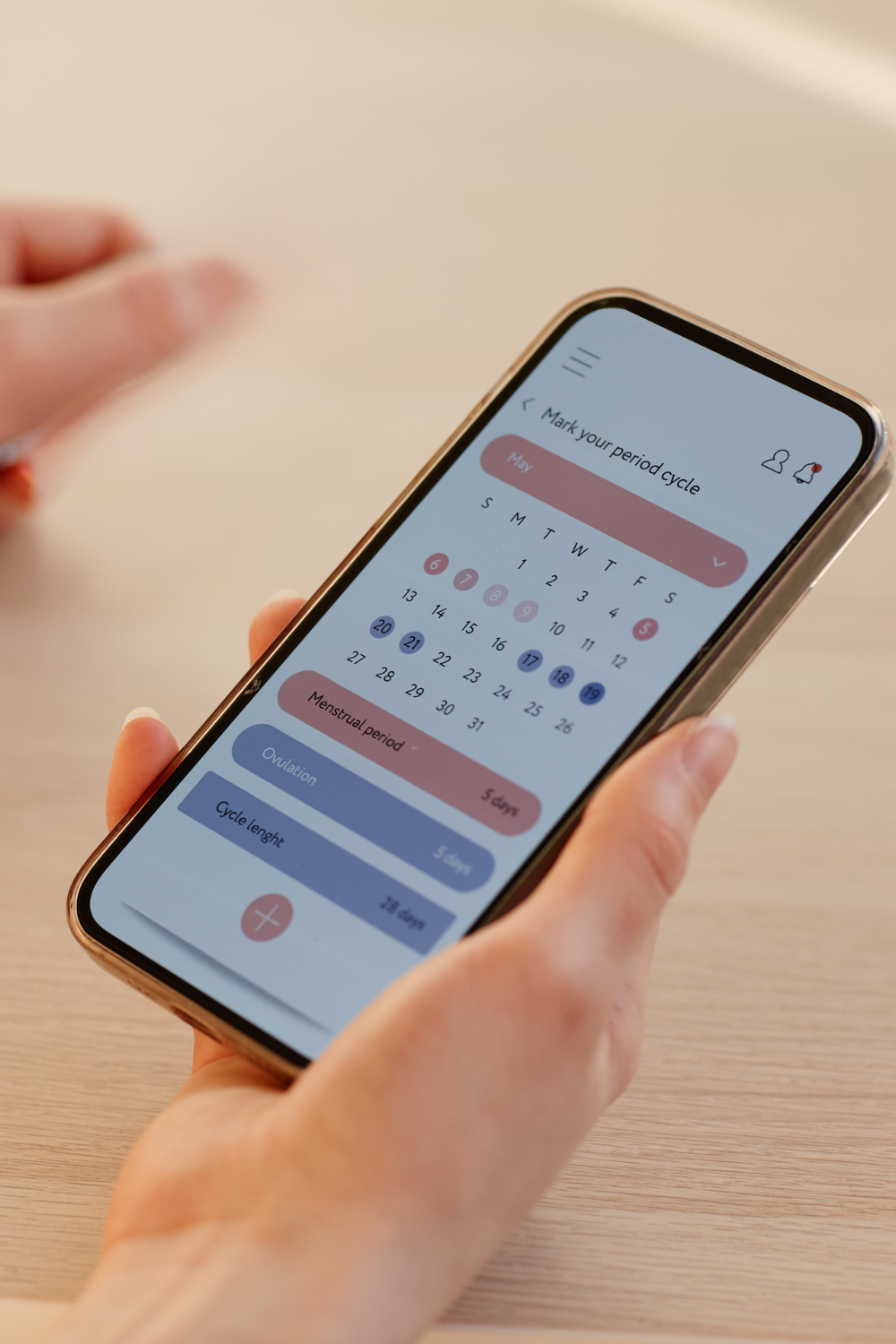
Or maybe it's the opposite. Your period showed up and just didn't stop on schedule, so now you're quietly counting days on your phone, watching the number climb past what feels normal, wondering when, or if, it's going to ease up.
Either way, you've probably tried to explain it to yourself. Maybe it's stress. Maybe you're working out too much, or not enough. Maybe your body is just "off" right now and it'll sort itself out next cycle.
Sometimes it does sort itself out, for a month or two. Then it happens again.
Here's what almost no one explains clearly: missed periods and long, heavy periods can look like opposite problems, but for many women with PMOS | PCOS, they come from the exact same root cause.
What's Actually Happening in Your Cycle
PMOS | PCOS shows up differently for every woman. What follows is one common pattern behind this, not the only one. If it doesn't quite match your body, that doesn't mean this isn't PMOS | PCOS, it just means yours is showing up a different way.
At the center of both patterns is something called anovulation, meaning your ovary isn't releasing an egg on a regular, predictable schedule. It's one of the core features of PMOS | PCOS, not a rare complication of it.
Here's the mechanism. In PMOS | PCOS, insulin resistance leads your body to produce more insulin to compensate. That extra insulin stimulates your ovaries to produce more androgens, and elevated androgens disrupt the delicate hormonal signaling that normally allows a follicle to mature and release an egg. Without that signaling working the way it should, ovulation becomes irregular or stops happening some cycles altogether.
This is where the two symptoms that seem opposite actually connect. Ovulation is what triggers your body to produce progesterone. Without ovulation, there's no progesterone to balance out estrogen, so estrogen keeps building up your uterine lining with nothing to signal a normal, timely shed. Depending on your body, that plays out one of two ways. Sometimes the lining simply doesn't shed on schedule, so your period is late or skipped entirely for a month or more. Other times, the lining builds up for so long that when it finally does shed, it comes off heavier and for longer than a typical period.
Same root cause. Two different ways your body can express it.
You might be wondering, if my period eventually shows up on its own, does that mean everything's actually fine? Not necessarily. A cycle that's irregular because ovulation isn't happening consistently still means that unopposed estrogen buildup is occurring cycle after cycle, and over time that's linked to a higher risk of endometrial hyperplasia, an overgrowth of the uterine lining. So relief that a period eventually showed up is understandable, but it's not the same as everything being resolved underneath.
None of this happened because you tracked wrong, exercised too much or too little, or weren't eating clean enough. Ovulation not happening reliably is a hormonal pattern, not a lifestyle failure, and it's one of the most common ways PMOS | PCOS shows up in the first place.
If you've been trying to make sense of an unpredictable cycle on your own, having someone help you connect it to the bigger picture is exactly what coaching is for. Schedule Your Free PMOS | PCOS Strategy Session and let's start figuring it out together.
Why This Is Worth Taking Seriously, Not Just Waiting Out
It's easy to file irregular periods under "annoying but not dangerous," especially when there's no pain involved and life is already full.
But irregular or absent ovulation over time is connected to more than just an unpredictable calendar. It's tied to fertility, since you can't conceive in a cycle where an egg isn't released. It's tied to that endometrial lining risk we just talked about. And it's tied to the same insulin resistance driving other symptoms you may already recognize from elsewhere in this series, the skin changes, the hair thinning, the acne.
If you're noticing missed or prolonged periods alongside any of those other signs, that combination is worth bringing to your doctor as one connected picture, not a list of separate, unrelated complaints.
What to Do Next
Track what's actually happening, even loosely. How many days since your last period, or how many days a recent period lasted. That detail matters more to your doctor than you might expect.
Ask specifically about ovulation, not just your period. Bloodwork looking at hormone levels, along with ruling out thyroid involvement, can help confirm whether anovulation is the underlying driver.
If you haven't been evaluated for PMOS | PCOS yet and you're noticing this pattern alongside other symptoms, say so directly and ask that they be considered together. There are also medical options worth discussing, from hormonal treatments that regulate the cycle to medications that support ovulation directly, depending on your goals.
Where Coaching Fits In
Your doctor can evaluate what's happening hormonally and recommend treatment. But very few people are positioned to help you support ovulation regularity from the daily-life side, the eating patterns, sleep, and stress load that influence insulin sensitivity in the background.
That's where coaching comes in. If you're curious what that actually looks like day to day, here's what a PMOS | PCOS coach actually does. Since insulin resistance is so closely tied to whether ovulation happens reliably, supporting your body's insulin sensitivity through sustainable, realistic changes can play a meaningful role alongside whatever your doctor recommends, not instead of it.
This isn't about forcing your cycle onto a rigid schedule through willpower. It's about supporting the underlying hormonal pattern so your body has a better chance of finding its own rhythm.
If you've been quietly tracking days on your phone, wondering what your cycle is trying to tell you, you don't have to figure it out alone.
Your free Strategy Session is a relaxed conversation where you tell me what's been going on, I listen to the whole picture, and you leave with one or two clear next steps whether we work together or not. Schedule Your Free PMOS | PCOS Strategy Session → No pressure. No pitch. Just a real conversation about what your body might be telling you.
If your periods actually come regularly but you've been struggling to conceive, that's a related but different pattern worth exploring, since a regular cycle doesn't always mean ovulation is happening.