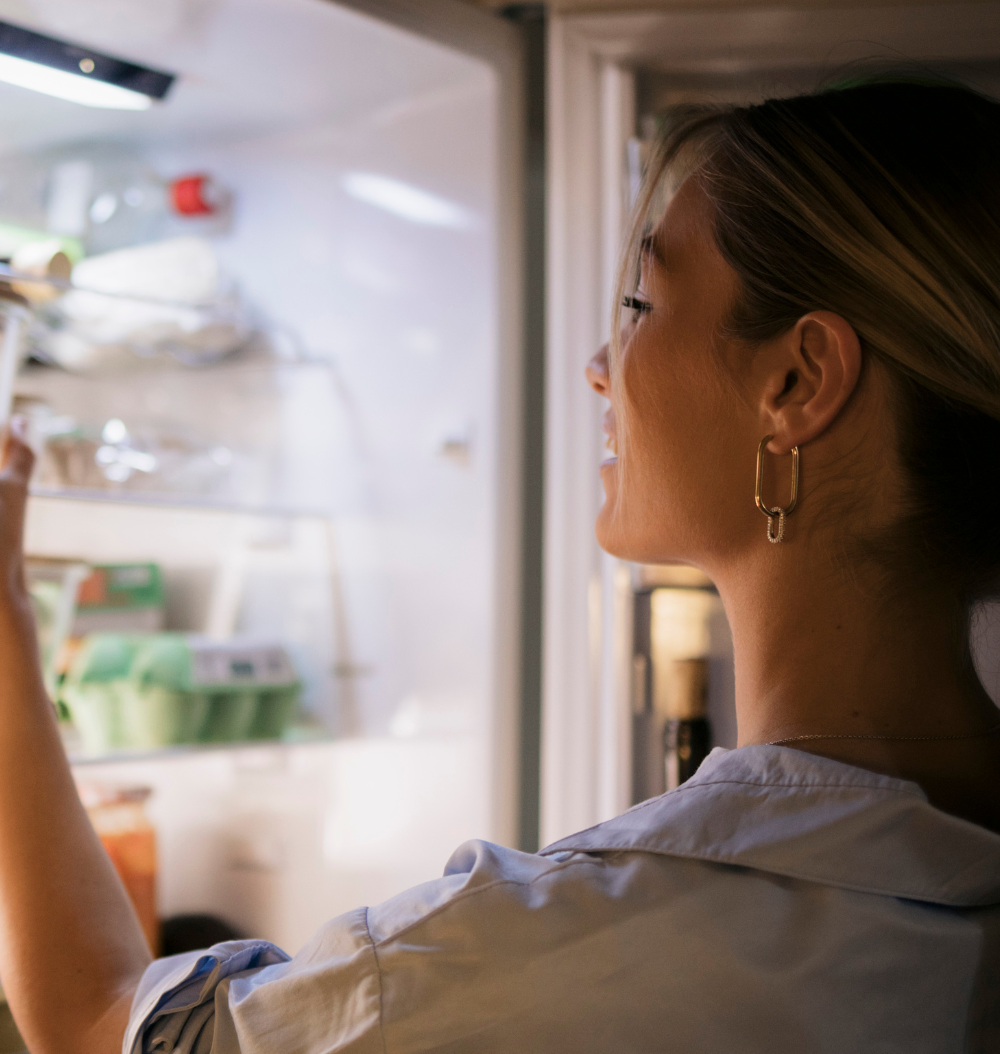
The craving hits and it doesn't feel like a preference. It feels like a demand.
Usually it's carbs or sugar, and usually it comes on hard, sometimes an hour after you've already eaten a real meal. You're not even hungry, exactly. Your body just wants it, urgently, in a way that's difficult to think your way out of.
So you've tried to muscle through it. Willpower. Discipline. Keeping the tempting foods out of the house and when the craving won't quit and you finally give in, you're left feeling like you failed at something simple that everyone else seems to manage just fine.
Here's the first thing I want you to hear: this is not a willpower problem. The intensity of these cravings has a physiological explanation, and once you understand it, the whole experience stops feeling like a personal failing and starts making a lot more sense.
What's actually driving the cravings
PMOS | PCOS shows up differently for every woman. What follows is one common pattern behind this, not the only one. If it doesn't quite match your body, that doesn't mean this isn't PMOS | PCOS, it just means yours is showing up a different way.
For many women with PMOS | PCOS, the cravings trace back to insulin resistance and the blood sugar swings that come with it. When your cells don't respond well to insulin, your body isn't getting fuel into them efficiently, even when there's plenty of sugar in your blood. Your brain reads that as a fuel shortage and signals, loudly, for the fastest possible energy source, which is exactly why the craving is so often for something sugary or starchy. It's not a random urge. It's your body asking for fuel in the only way it knows how when the usual system isn't working smoothly.
Your appetite hormones add another layer. Leptin is the hormone that's supposed to tell your brain you're full, but with PMOS | PCOS, research suggests the brain often becomes less responsive to its signal, so the “I'm satisfied” message doesn't land the way it should. Ghrelin, the hunger hormone, can stay elevated when sleep and stress are disrupted. Put those together and you get the maddening experience of feeling hungry or unsatisfied even after a full meal. Again, not a discipline gap but a signaling problem.
And here's a piece that too much PMOS | PCOS advice gets exactly backwards: restriction itself can make cravings worse. When you try to white knuckle your way through by cutting hard and eating less, your body often responds by ramping the cravings up further, because it reads restriction as scarcity. So the harder you clamp down, the louder the signal gets. That's not you being weak. That's a predictable biological response to restriction.
You might be wondering, so if I just had more self-control, couldn't I push through these? This is the reframe I most want to offer you. The cravings aren't loud because your self-control is weak. They're loud because your body is genuinely dysregulated underneath, and no amount of willpower rewrites a hormonal signal. The women I see who finally get relief don't do it by white-knuckling harder. They do it by supporting the system that's sending the signal in the first place.
None of this is your fault. You have not been failing at something easy. You've been fighting your own biology with a tool, willpower, that was never going to be strong enough on its own, because the problem was never really about willpower to begin with.
If you've been quietly blaming yourself for cravings you can't seem to outmuscle, that's exactly the kind of thing coaching helps you understand and work with instead of fight.
Why this matters beyond the cravings themselves
Cravings can feel like a small, almost embarrassing thing to bring up, the kind of symptom you assume you're just supposed to handle privately.
But they're worth understanding, both because they point at what's happening with your blood sugar and insulin underneath, and because of the cycle they can create. Giving in to intense cravings leads to bigger blood sugar spikes, which feeds back into the insulin resistance driving the cravings in the first place. It's a loop, and it's a genuinely hard one to break through effort alone. That's not a moral failing on your part, it's the nature of the loop.
The cravings also tend to travel with the other signs we've talked about in this series, the fatigue, the midsection changes, the energy crashes, because they share the same metabolic roots. Seeing them as connected, rather than as a series of separate personal shortcomings, is often the thing that finally makes the whole picture click.
What to do next
If intense cravings are part of your picture, it's worth a conversation with your doctor about insulin resistance specifically, through markers like fasting glucose, fasting insulin, and/or an A1C. Understanding what's happening with your blood sugar gives you a far more useful starting point than another round of trying harder.
Women with PMOS | PCOS have a significantly higher rate of body dysmorphia, eating disorders, and disordered eating. So it's also worth being gentle and honest with yourself about your relationship with food. If cravings, restriction, and guilt have started to feel tangled together, that's common with PMOS | PCOS and it's nothing to be ashamed of, but it does change what the right next step looks like. If any of that resonates, please know support exists and you deserve it.
What you don't need is another plan built on cutting harder and relying on willpower you've already proven isn't the issue. That approach tends to feed the very cycle you're trying to escape.
Where coaching fits in
Your doctor can look at the labs and the metabolic picture. Coaching is for the part that comes after, figuring out how to actually support steadier blood sugar in a way that quiets the cravings over time, without restriction and without the shame spiral.
The way I work isn't about handing you a rigid list of forbidden foods or telling you to simply resist harder. It's about looking at your whole picture, your blood sugar stability, your sleep, your stress, your movement, and building gentle, sustainable shifts that support the system sending those signals. Small changes that actually hold up, not a punishing overhaul that makes the cravings roar back the moment it falls apart.
And because I live with PMOS | PCOS myself, I know these cravings from the inside. I'm not asking you to do anything I haven't had to figure out in my own body.
If you've been fighting your own biology and blaming yourself for losing, you don't have to keep doing that alone. Your free Strategy Session is a relaxed conversation where you tell me what's been going on in your body and your head, I listen to the whole picture, and you leave with one or two clear next steps whether we work together or not.
Schedule Your Free PMOS | PCOS Strategy Session - No pressure. No pitch. Just a real conversation about what your body might be telling you.
Cravings rarely travel alone. They often show up alongside fatigue that sleep doesn't fix, dark, velvety skin patches, small skin tags, and racing thoughts and anxiety.
A note on a sensitive topic: if any part of this brought up a difficult relationship with food, restriction, or your body, please know that's worth taking seriously and you don't have to navigate it alone. Support is available, and a good next step can be talking with your doctor or reaching out to the National Alliance for Eating Disorders helpline.