You noticed it first in the shower.
More hair in your hands than usual. More strands on the bathroom floor. More caught in your brush, enough that you started counting, even though you told yourself you wouldn't.
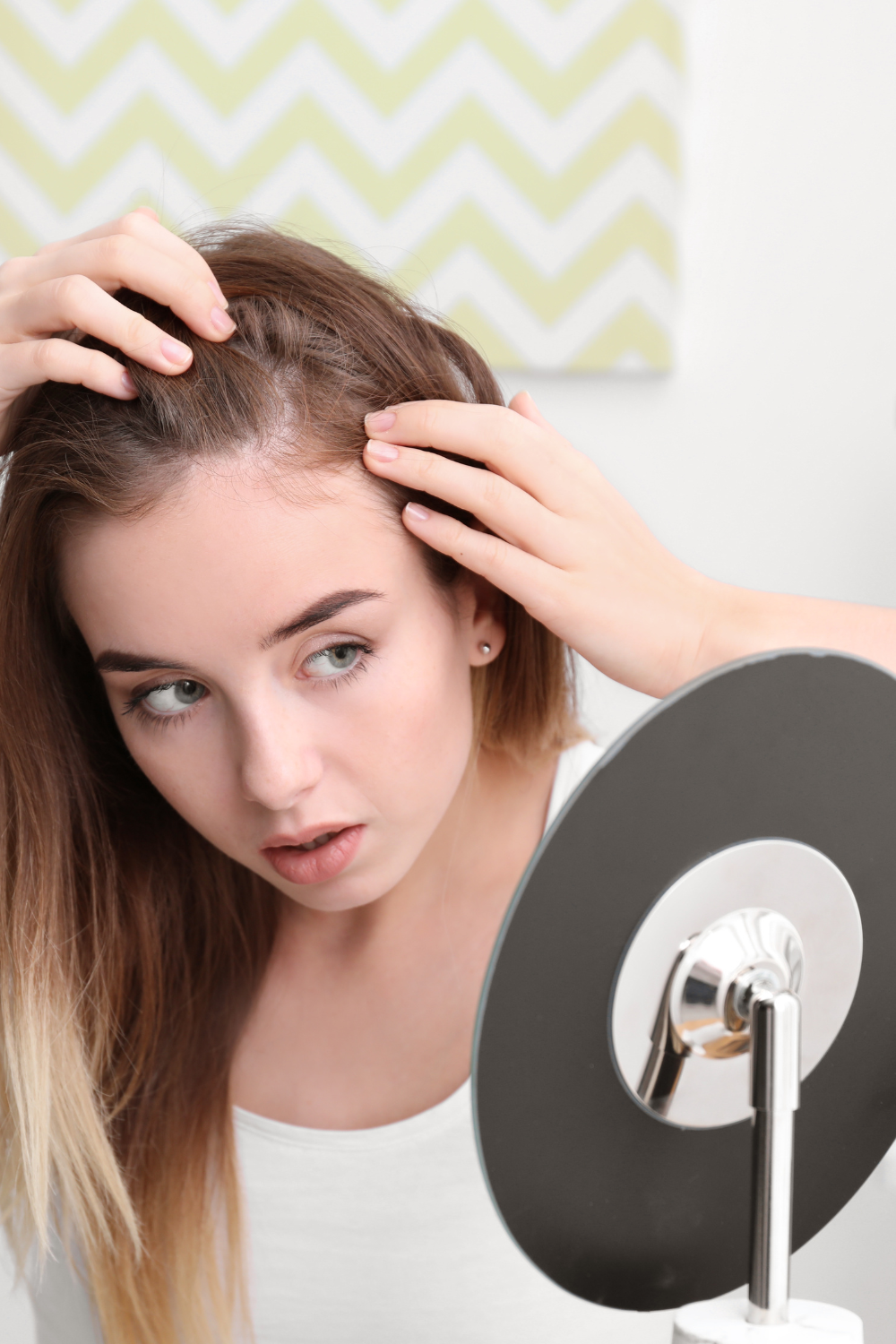
Then you noticed it in photos. Your part looked wider than you remembered. The top of your head seemed to show through a little more under bright light. You started angling yourself differently in pictures without really deciding to. You started parting your hair a different way, not because you liked it better, but because it covered more.
Maybe you haven't told anyone how much this actually bothers you. It can feel like a strange thing to grieve out loud, especially next to everything else PMOS | PCOS already asks you to deal with. But hair is tied to how we see ourselves in a way that's hard to explain to someone who hasn't lived it, and watching it thin can feel like quietly losing a piece of yourself, one strand at a time.
So you tried the things everyone tries. A new shampoo that promised thickness, a biotin supplement, a hair oil. Maybe you stopped using heat tools for a while, certain that had to be the culprit.
Your hair kept thinning anyway.
Here's what almost no one tells you up front: this specific pattern -- gradual thinning at the crown, a part that keeps getting wider, a hairline that stays mostly intact while everything behind it gets thinner -- has a name and a known cause. It's called androgenic alopecia, and for many women, it's one of the clearest signals of PMOS | PCOS.
What's Actually Happening to Your Hair
PMOS | PCOS shows up differently for every woman. What follows is one common pattern behind this, not the only one. If it doesn't quite match your body, that doesn't mean this isn't PMOS | PCOS, it just means yours is showing up a different way.
Androgenic alopecia, sometimes called female pattern hair loss, is driven by the same hormones behind several other PMOS | PCOS symptoms: androgens.
Here's the mechanism. Testosterone, one of the androgens your body produces in small amounts naturally, can convert into a more potent form called DHT. DHT binds directly to receptors in your hair follicles, and over time, that binding causes the follicles to shrink. As a follicle shrinks, it produces thinner, shorter, weaker hair. The growth phase of your hair cycle also gets shorter, which means hair gets pushed into its resting and shedding phase faster than it should. Eventually, some follicles stop producing visible hair altogether.
In PMOS | PCOS, elevated androgen levels mean more of this DHT driven shrinking happening across your scalp at once, which is why the thinning tends to feel gradual but steady rather than sudden.
This is also why the pattern looks specific rather than random. Unlike some other types of hair loss, androgenic alopecia doesn't usually cause patchy bald spots. Instead, you'll typically notice diffuse thinning at the crown, a widening part line, or an overall reduction in density. The front hairline itself usually stays intact, which is actually one of the most useful ways to tell this apart from other causes of hair loss.
You might be wondering, if I start treating this now, will my hair fully grow back? Sometimes, especially if treatment starts before follicles have been shrinking for years. But even without a guarantee of full regrowth, slowing or stopping further thinning is still absolutely worth pursuing, and that's true no matter how long you've been noticing this.
None of this happened because of something you did. Not your shampoo, not a skipped hair mask, not stress you think you should have managed better. This is androgen driven, it is common among women with PMOS | PCOS, and it is not a reflection of anything you failed to do.
If you've been carrying this quietly and wishing someone would actually look at the whole picture with you, that's exactly the kind of support coaching is meant to offer. Schedule Your Free PMOS | PCOS Strategy Session and let's look at it together.
Why This Rarely Shows Up Alone
This kind of hair thinning rarely happens in isolation with PMOS | PCOS. It's usually part of a broader pattern, alongside things like unwanted hair growth in places you don't want it, hormonal acne, missed or unpredictable periods, and fatigue that sleep doesn't fix.
That makes sense once you understand the shared cause. The same elevated androgens driving your hair thinning are often the same ones contributing to jawline acne or irregular periods. If you've read other posts in this series, this is the same underlying hormonal and metabolic picture showing up in yet another part of your body.
It also means you're allowed to feel however you feel about this, without minimizing it. Losing hair isn't "just cosmetic" any more than acne is "just a skin thing." It's a visible part of you changing in a way you didn't choose, and that's worth taking seriously, both medically and emotionally.
If you're noticing hair thinning alongside any of those other signs, that combination is worth bringing to your doctor as a pattern, not as a series of separate, unrelated complaints.
What to Do Next
Hair loss can feel like one of the more emotionally heavy PMOS | PCOS symptoms to bring up, but it's worth saying clearly to your doctor exactly what you're noticing.
Ask about checking your androgen levels through bloodwork, since elevated testosterone or DHEAS can help confirm what's driving the thinning. It's also worth ruling out other common causes of hair loss, like thyroid issues or iron deficiency, since those can look similar but require different treatment.
If you haven't been evaluated for PMOS | PCOS yet and you're noticing hair thinning alongside irregular periods or other androgen-related symptoms, say so directly. That combination is exactly the kind of pattern providers are trained to investigate together.
There are also targeted treatments worth discussing, including topical and oral options that work specifically on androgen driven hair loss, separate from anything lifestyle related.
Where Coaching Fits In
Treating hair loss directly, through medication or topical treatment, is its own important piece of this -- but it doesn't address why your androgen levels are elevated in the first place.
That's where coaching comes in. If you're curious what that actually looks like day to day, here's what a PMOS | PCOS coach actually does. Since insulin resistance and elevated androgens are closely linked, supporting your body's insulin sensitivity through sustainable changes to your eating patterns, sleep, and stress levels can play a meaningful supporting role alongside whatever medical treatment you and your doctor decide on.
This isn't about quick fixes or promising your hair will fully regrow through lifestyle changes alone. It's about addressing the underlying hormonal pattern from more than one angle, so you're not just treating the hair loss in isolation while everything driving it stays the same.
You don't have to pretend this doesn't bother you, and you don't have to navigate it alone. Your free strategy session is a relaxed conversation where you tell me what's been going on, I listen to the whole picture, and you leave with one or two clear steps whether we work together or not.
Schedule Your Free PMOS | PCOS Strategy Session → No pressure. No pitch. Just a real conversation about what your body might be telling you.
PMOS | PCOS hair loss rarely travels alone. It often shows up alongside hormonal acne, unwanted hair growth, dark velvety skin patches, small skin tags, and fatigue that sleep doesn't fix.